
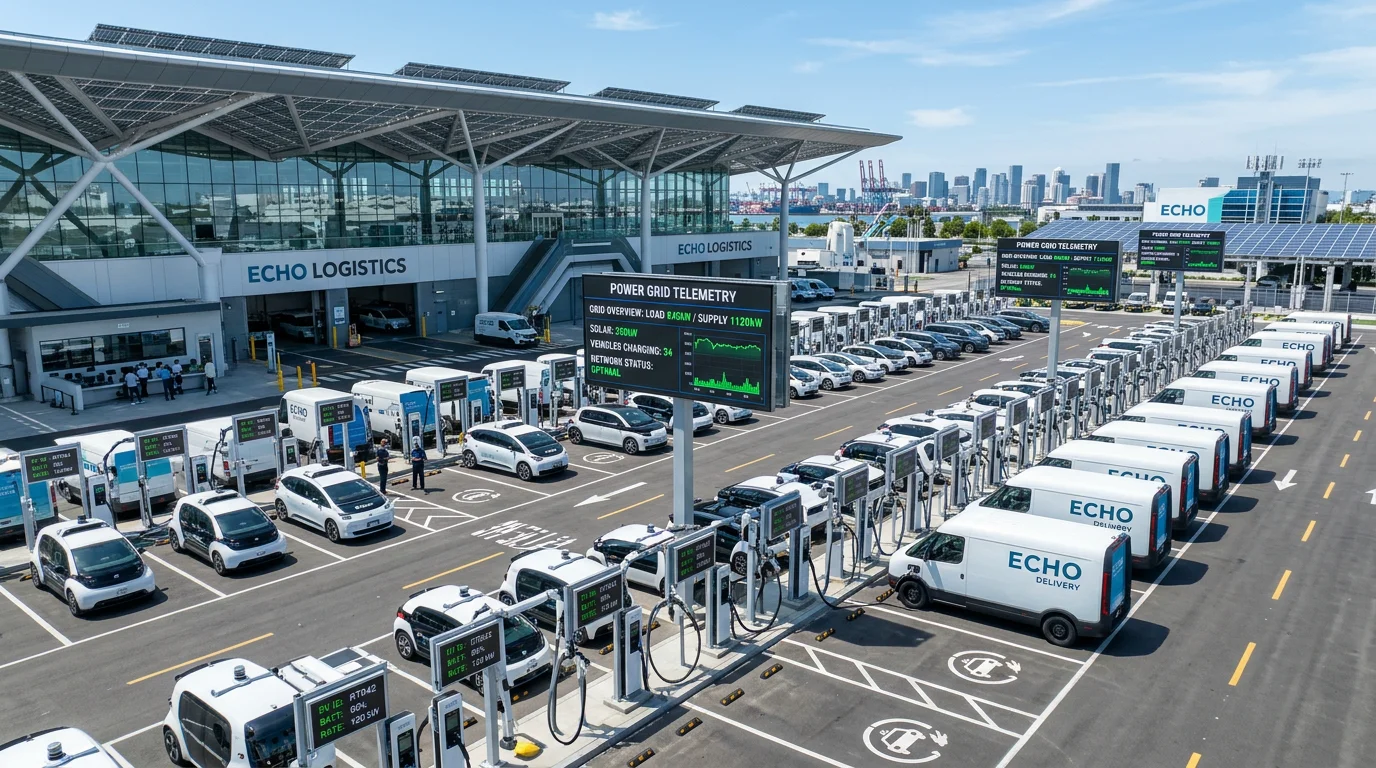
Until recently, the rapid growth of electric vehicles was viewed by municipal power grid operators with deep anxiety: millions of cars plugging in simultaneously at 6:00 PM would create catastrophic evening demand spikes, overloading neighborhood transformers and requiring tens of billions in capital expenditure for fossil-fueled peaker plants. Artificial intelligence fleet orchestration algorithms have turned that equation completely upside down.
Commercial Robotaxis as Distributed Virtual Power Plants
As commercial robotaxi fleets and electric delivery vans scale to tens of thousands of vehicles in major metropolitan areas, predictive machine learning models are transforming idle fleet depots into high-capacity Virtual Power Plants (VPPs). Because autonomous commercial vehicles operate without human driver shift scheduling limitations, algorithms continuously optimize recharging cycles around real-time locational marginal electricity pricing (LMP).
When utility-scale solar generation surges at midday in desert regions, wholesale electricity prices frequently turn negative—meaning grid operators pay fleet depots to absorb surplus generation. Fleet AI automatically directs thousands of autonomous vehicles to plug into depot chargers during these pricing troughs, soaking up renewable power that would otherwise be curtailed.
Synthetic Inertia & Millisecond Frequency Regulation
Traditional electrical grids rely on the massive spinning iron rotors of steam turbines in coal and gas plants to maintain 60 Hz (or 50 Hz) frequency stability. As fossil generators retire, power grids lose physical rotational inertia. A fleet of 5,000 commercial electric vehicles equipped with smart bidirectional inverters can inject megawatt bursts of power into the grid within 8 milliseconds of a frequency disturbance, stabilizing regional power grids faster than any mechanical turbine in existence.