
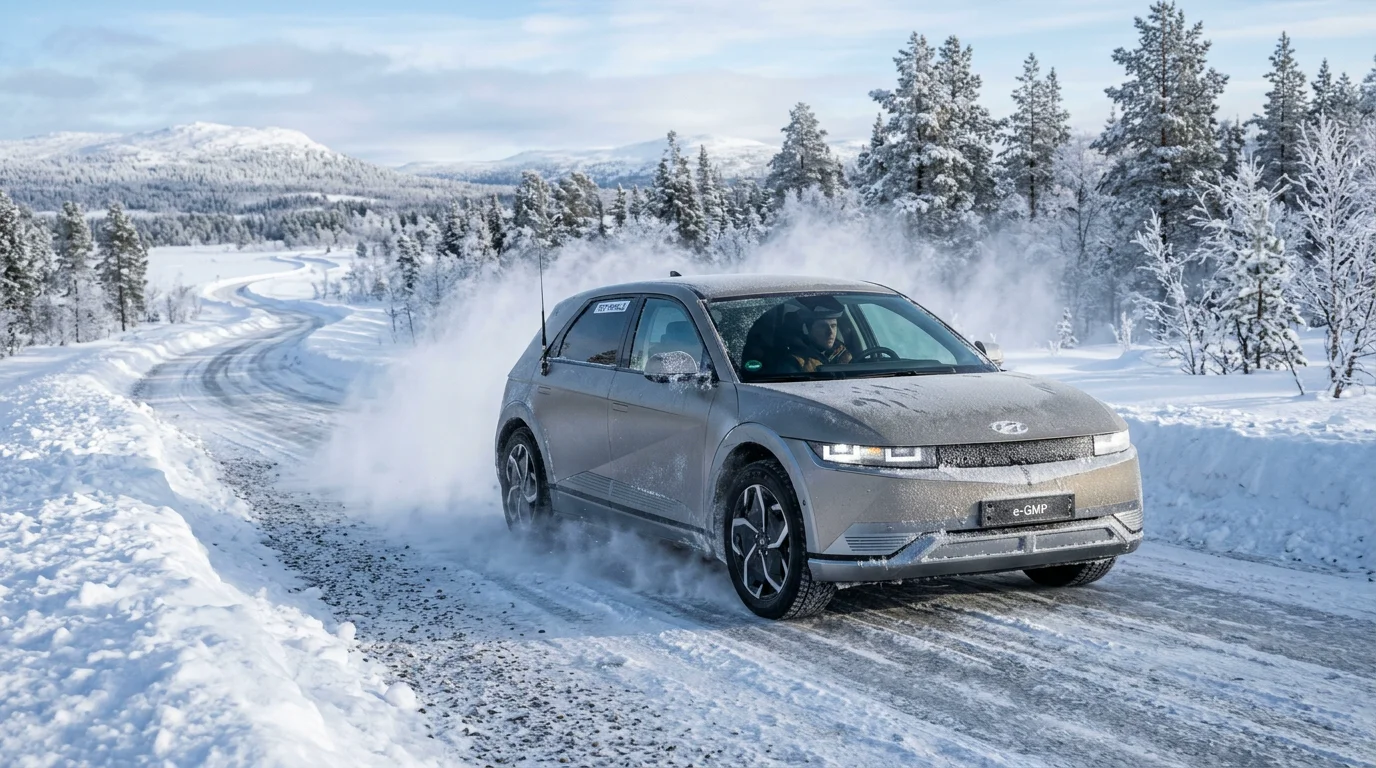
Cold weather remains the ultimate crucible for electric vehicles. When ambient temperatures drop below freezing, the laws of thermodynamics, fluid viscosity, and electrochemistry conspire against battery efficiency. To separate marketing claims from real-world survival, we took 12 popular electric vehicles into northern Minnesota for an exhaustive 500-mile highway depletion test conducted at 15°F (-9.4°C).
The Thermodynamics of Winter Energy Depletion
Why do electric cars lose range in the winter? In an internal combustion vehicle, roughly 65% of the energy in gasoline is wasted as heat; that waste heat is easily redirected to warm the passenger cabin. An electric vehicle, by contrast, is over 90% efficient—it produces virtually zero waste heat. Every calorie of thermal energy required to heat the cabin must be drawn directly from the traction battery.
Furthermore, low temperatures increase the viscosity of liquid electrolytes inside lithium-ion battery cells, slowing the mobility of lithium ions between the cathode and anode. This increases internal cell resistance, reducing usable battery capacity and limiting regenerative braking capability until the pack reaches operating temperature.
Heat Pumps vs Resistive PTC Heaters: The 20% Difference
Our instrumented test revealed a stark technological divide: vehicles equipped with advanced multi-source heat pump systems preserved between 78% and 82% of their rated highway range, while vehicles relying on old-school resistive Positive Temperature Coefficient (PTC) heaters lost up to 44% of their range.
A resistive heater works like a giant toaster oven: consuming 5,000 to 6,000 watts of electrical power to generate a coefficient of performance (COP) of exactly 1.0 (one watt of electricity yields one watt of heat). Modern heat pumps (such as Tesla's Octovalve system and Hyundai's E-GMP thermal circuit) scavenge ambient air heat as well as waste heat from the electric motors and inverters, achieving a COP exceeding 3.0 down to 10°F. This reduces cabin heating energy draw from 5 kW down to less than 1.5 kW, preserving over 50 miles of extra range per charge.
Cold-Weather Fast Charging: The Preconditioning Rule
The most frustrating winter EV experience is 'cold gating' at DC fast chargers. If you plug a frozen 15°F battery pack directly into a 350kW DC fast charger, the battery management system (BMS) will aggressively throttle charging speeds down to 25–40 kW to prevent irreversible lithium metal plating on the graphite anode.
To avoid this delay, drivers must always set their destination charging stop in the vehicle's native navigation system at least 35 minutes prior to arrival. This instructs the thermal system to heat the battery pack to 77°F (25°C) while en route, ensuring full 200kW+ fast-charging speeds upon arrival.
Essential Winter Driving Protocols for Maximum Range
Based on our instrumented telemetry, adhering to these four protocols will recover up to 22% of lost winter range: 1. Precondition on Grid Power: Schedule your departure time while the EV is still plugged into your 240V Level 2 home charger. This warms the cabin and battery to optimal operating temperature using household electricity rather than battery reserves. 2. Rely on Heated Seats & Steering Wheel: Heated seats consume just 60 watts compared to 3,000 watts for forced hot-air HVAC blowers. Lower the cabin thermostat to 66°F and utilize seat warmers. 3. Calibrate Tire Pressures: For every 10°F drop in ambient temperature, tire pressure drops by approximately 1 PSI. Cold, underinflated tires dramatically increase rolling resistance. 4. Equip Low-Rolling-Resistance Winter Tires: Dedicated EV winter rubber maintains compound flexibility in freezing temperatures while preserving aerodynamic efficiency.