
One of the most pervasive misconceptions regarding electric vehicles is the fear that millions of spent automotive battery packs will accumulate in toxic landfills. In reality, while an internal combustion engine burns fossil fuels once into the atmosphere, an electric car battery locks valuable transition metals into a sealed enclosure that can be recycled infinitely with zero degradation in electrochemical performance.
From Black Mass to Purified Precursor Crystals
The industrial battery recycling lifecycle begins with automated module shredding inside oxygen-starved, inert nitrogen chambers to neutralize residual electrical charge and prevent ignition. The crushed material is mechanically sieved, separating light plastic casings and aluminum foils from 'black mass'—the concentrated powder containing lithium, nickel, cobalt, and manganese.
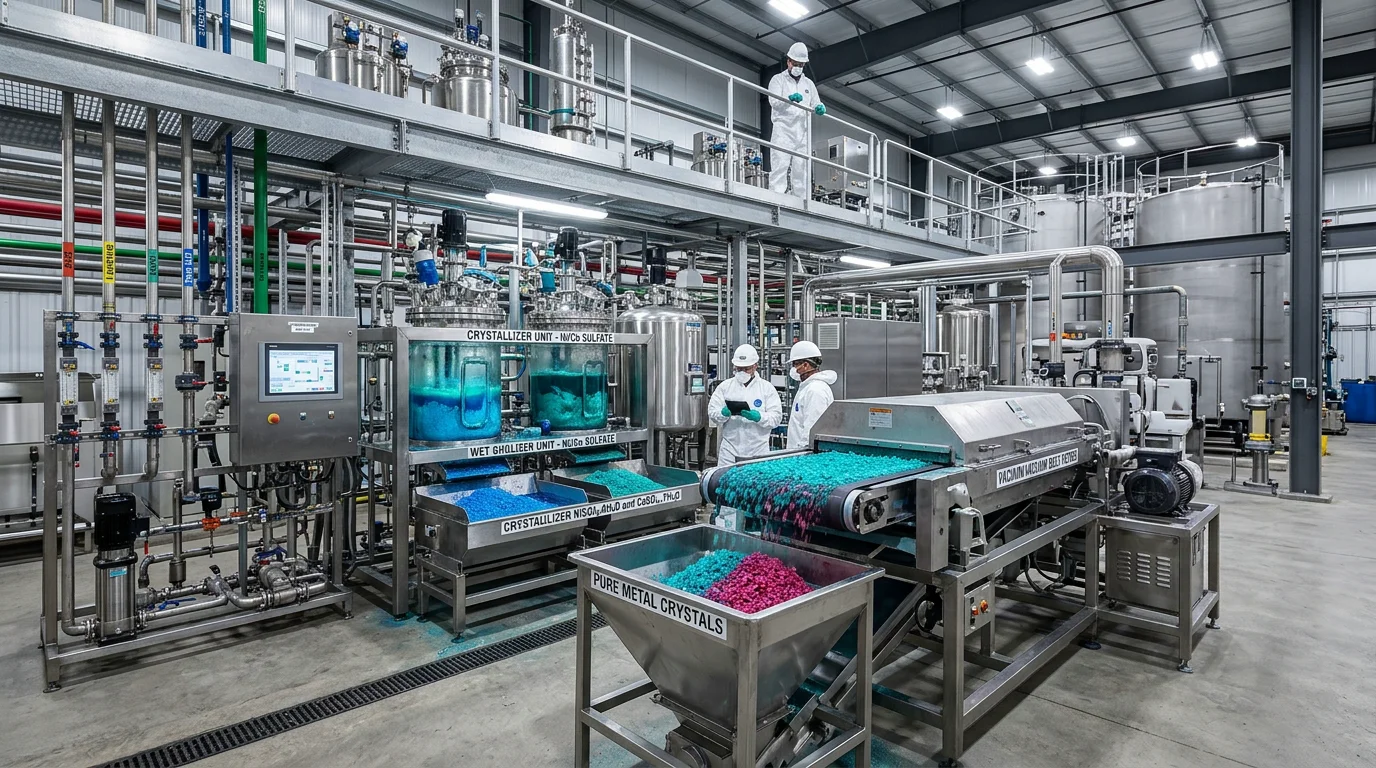
Rather than utilizing energy-intensive, polluting pyrometallurgical smelting, modern facilities employ closed-loop hydrometallurgical chemical solvent extraction. Using specialized acid leaching and crystallization processes, chemical engineers selectively precipitate battery-grade lithium carbonate, nickel sulfate, and cobalt sulfate crystals at 99.9% purity.
The Urban Mining Advantage & Regulatory Passports
A single metric ton of spent electric vehicle black mass contains roughly 100 times more concentrated lithium and 30 times more cobalt than a metric ton of natural raw ore mined from the earth. As first-generation EVs reach end-of-life, recycling facilities function as high-yield domestic mineral mines that emit 73% less greenhouse gas than open-pit extraction.
With stringent European Union and United States Battery Passport mandates requiring minimum quotas of recycled content in new automotive packs by 2030, closed-loop circular refining has transformed from an environmental ideal into an economic imperative for global carmakers.