
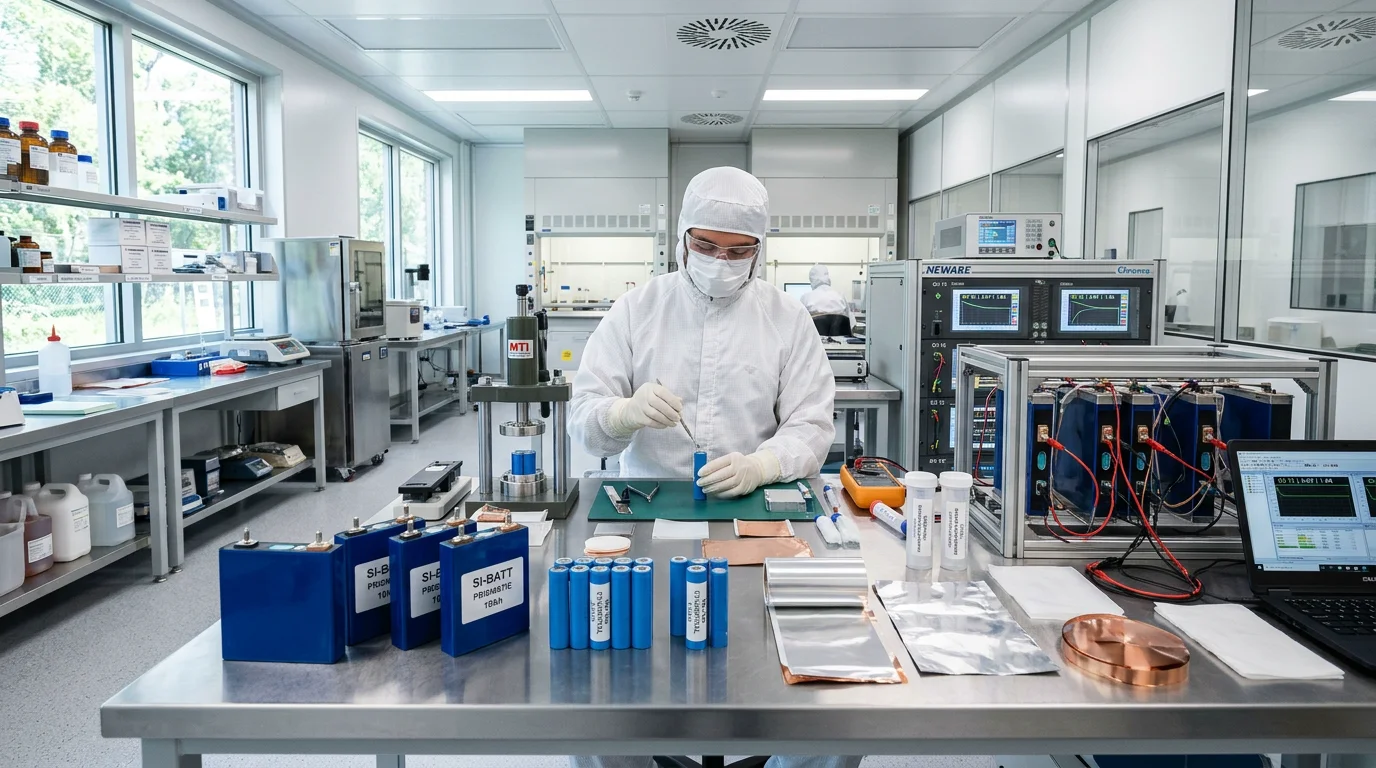
As global demand for lithium, nickel, and cobalt soars, geopolitical supply chain vulnerabilities and raw mineral extraction costs have dominated automotive executive boardrooms. Sodium-ion battery chemistry answers this challenge by utilizing an element found in infinite, democratic abundance in common table salt (NaCl) and seawater across every continent.
Earth-Abundant Raw Materials Without Geopolitical Bottlenecks
Raw sodium is over 1,000 times more abundant in the Earth's crust than lithium. Furthermore, sodium-ion batteries completely eliminate cobalt and nickel, relying instead on iron, manganese, and abundant hard carbon synthesized from agricultural byproducts. This drops cell-level bill-of-materials costs to approximately $38 to $44 per kWh—a 40% reduction compared to standard Lithium Iron Phosphate (LFP).
The Cold-Weather Resilience Miracle
A major flaw of traditional lithium-ion batteries is severe sluggishness in freezing temperatures. Sodium ions exhibit lower desolvation energy and higher ionic conductivity in low-temperature electrolytes. In instrumented cold-weather testing down to -20°C (-4°F), commercial sodium-ion pouch cells preserved over 92% of their rated discharge capacity without drawing battery power for active thermal heating pads.
Zero-Volt Transport Safety: Ending Fire Hazards in Shipping
Standard lithium-ion cells cannot be discharged below 2.0 volts without the copper anode current collector dissolving into the electrolyte and creating internal short circuits. Because sodium does not alloy with aluminum, sodium-ion cells utilize cheap, lightweight aluminum foil on both positive and negative terminals. Consequently, sodium-ion cells can be discharged to absolute 0.0 volts for global air and ocean shipping, completely eliminating transit fire risks.