
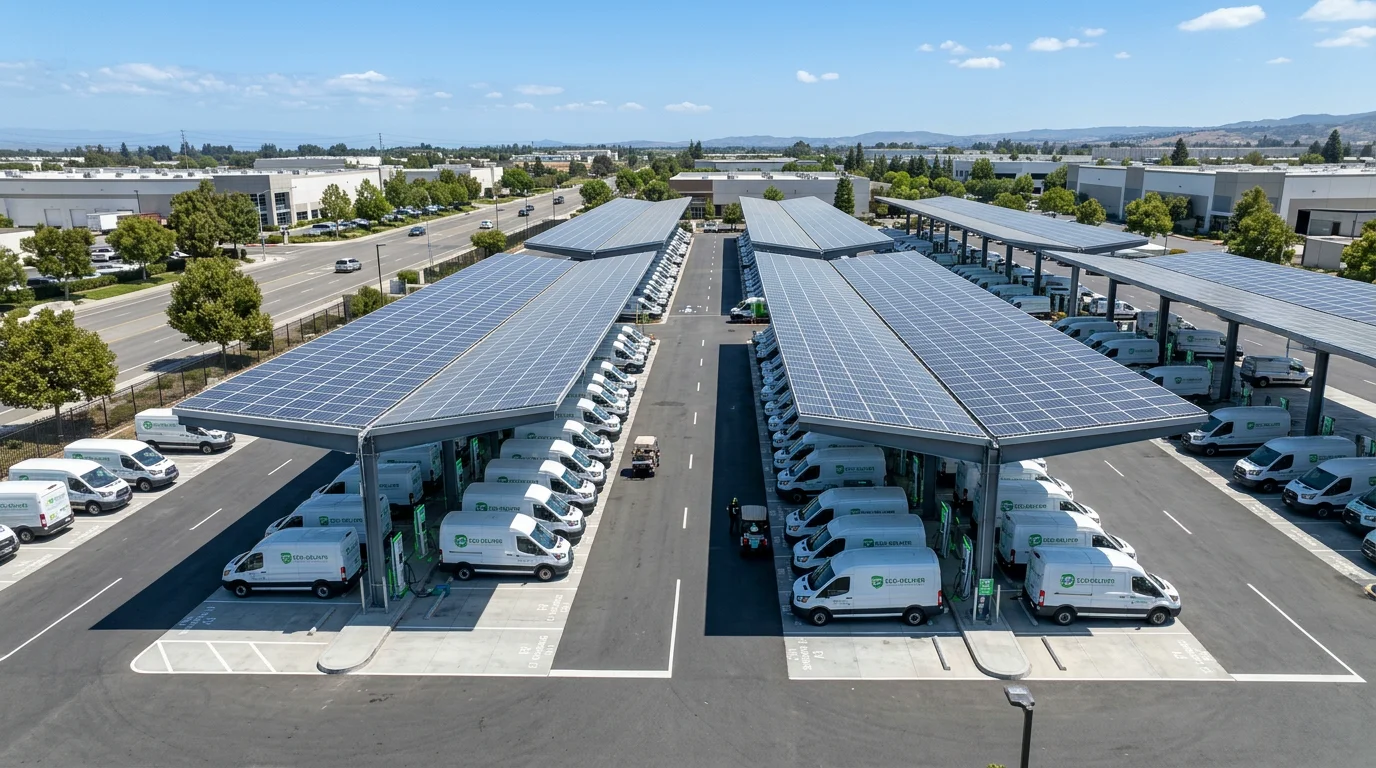
For commercial logistics fleet operators converting hundreds of urban delivery vans or municipal transit buses to electric powertrains, the primary bottleneck is often the local utility company. Requesting an 8-megawatt electrical service upgrade for a central distribution depot can involve utility lead times of three to five years. Decentralized solar canopies paired with microgrid battery storage bypass this infrastructure delay entirely.
Bifacial Monocrystalline Solar Canopies
Modern commercial depot parking structures deploy high-efficiency glass-on-glass bifacial solar canopies. While the upper panel surface captures direct overhead solar radiation, the specialized underside absorbs reflected albedo sunlight bouncing off light-colored concrete parking aprons. This bifacial architecture boosts daily energy yield by 14% to 19% compared to traditional single-sided rooftop solar arrays.
Taming Utility Demand Charges with On-Site BESS
Commercial electrical utility tariffs are dominated by 'demand charges'—steep financial penalties based on a facility's highest peak 15-minute electrical spike during a monthly billing cycle. If 50 electric delivery vans return to depot and plug in simultaneously at 5:30 PM, demand surcharges can quadruple monthly power bills. Containerized lithium iron phosphate (LFP) battery energy storage systems (BESS) automatically smooth these peaks, discharging stored solar electricity into vehicles during peak rate windows.
Islandable Microgrid Resilience During Extreme Blackouts
During severe weather emergencies and municipal grid blackouts, commercial logistics hubs equipped with islandable automated transfer switches isolate from the grid and continue generating clean solar electricity. Fleets of municipal emergency vehicles, refrigerated grocery trucks, and parcel delivery vans remain 100% operational while surrounding neighborhoods experience total utility failure.